
Model layer
Choose a provider model, private open-weight model or trained model against your evaluation set.
NEW AI-NATIVE PRODUCTS
Turn a model into a product ready for real users.
Build the screens, data pipelines, evaluation tests and fallback paths around the model—with a staged release and measured running costs.

THE STARTING POINT
AI-native software uses a model for its core workflow—classifying, predicting, extracting or generating. Product code, data access, user controls and tests surround that model.
Model demos break once live data, real users and running costs arrive.
AI software development from AppsGlobal turns a working model into a released product with evaluation tests, fallback paths and cost controls.
AI software development is the branch of AI engineering that designs, builds, tests and deploys new software around an artificial intelligence model. Machine learning models, large language models (LLMs) and computer vision models perform the core function in that software. Typical builds include contract-review tools, claims-triage applications, demand-forecasting platforms and visual inspection systems for production lines. AI-native software is the result: applications whose main workflow depends on a model that classifies records, predicts outcomes, extracts fields or generates text. Product code, data pipelines, evaluation tests and user screens surround that model.
AI software development in this sense differs from AI-assisted development, where engineers use coding assistants to write conventional software. Here the model sits inside the product as AI-powered software that people use in daily work. AppsGlobal provides AI software development services as one branch of AI solutions and engineering, its AI line within enterprise software development. Software engineering practice still governs each build through version control, code review and release pipelines.
01 / AI SOFTWARE DEVELOPMENT
Release requires more than an impressive output. Plan evaluation, data pipelines, product screens, running costs and correction flows from the first sprint.

Use evaluation cases and thresholds alongside conventional software tests.
Budget for ingestion, serving, configuration and monitoring around the model.
Define the user’s work, decision and acceptable error rate first.
Measure cost per request before projecting launch usage.
Show sources or uncertainty and give users an edit or override path.
AI software products stall when teams treat a working model as a finished product. Five gaps separate the two: untested probabilistic outputs, unplanned surrounding infrastructure, a problem framed around technology, unknown running cost and interfaces that hide model errors. Each gap has a technical cause that surfaces only after real users and live data arrive.
Model outputs vary between inputs that look alike. One prompt edit can shift results across thousands of cases. Unit tests with fixed expected values do not certify that behavior. Drafting and summarizing tasks have no single correct output string. Teams without an evaluation set then release changes with no measured baseline. Accuracy losses reach the business as user complaints instead of failed builds.
Data ingestion, feature preparation, model serving, configuration and monitoring surround each model in production. Budgets built around the model alone leave that surrounding software unplanned. Unplanned glue code then slows each later change. Google engineers described this pattern in "Hidden Technical Debt in Machine Learning Systems" (NeurIPS 2015). Sculley and his co-authors observed that only a small fraction of a real-world machine learning system is machine learning code. Their paper named glue code and pipeline jungles among the resulting debts.
Teams that choose a model first often leave the user task, the decision and the acceptable error rate undefined. No acceptance threshold exists for release. Sponsors then have no measure for approving or stopping the product. RAND's 2024 report, based on interviews with 65 data scientists and engineers, cited estimates that more than 80 percent of AI projects fail. Its authors listed a misunderstood problem and a focus on the latest technology among the root causes.
Inference cost grows with request volume, prompt length and the amount of retrieved context sent with each request. Prototypes serve internal testers only, on short prompts and small document sets. Per-request cost stays invisible at that scale. Launch traffic then multiplies the bill against a budget that assumed hosting cost alone.
Screens that show a generated answer without a source, a confidence cue or an edit path give users no basis for judging it. Some users copy wrong outputs into records. Others abandon the feature after its first visible error. Microsoft Research addressed this gap in its Guidelines for Human-AI Interaction (CHI 2019). Those 18 guidelines, synthesized from more than 150 design recommendations, include "Make clear what the system can do" and "Support efficient correction."
Each gap points to engineering work outside the model itself: evaluation sets, product infrastructure, task framing, cost design and interaction design. AI software development plans that work from the first sprint, beginning with the product type and the model it needs.
02 / AI SOFTWARE DEVELOPMENT
Explore five AI-native product types. Match the model family to the task, data, users and approval rules.
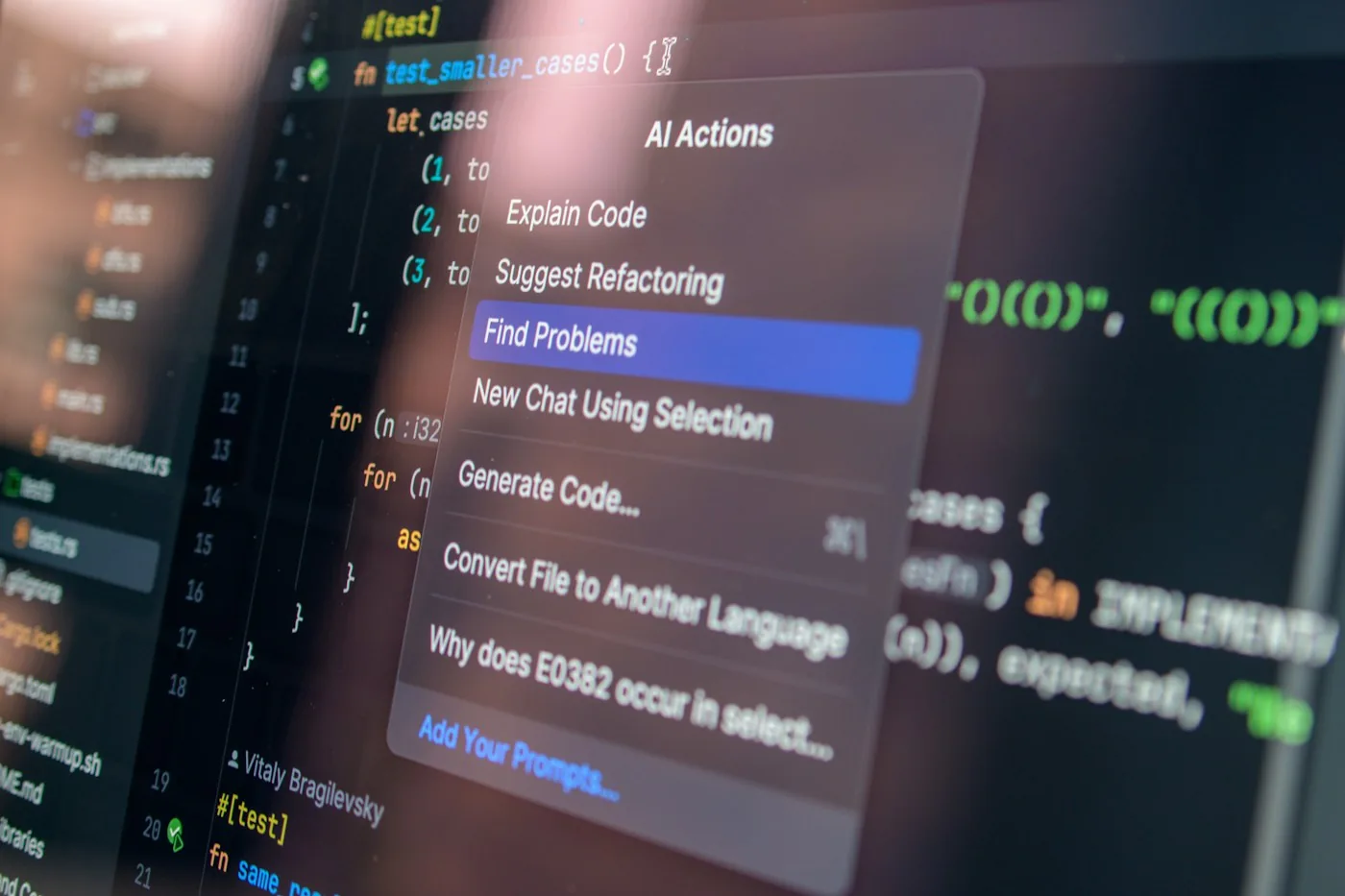

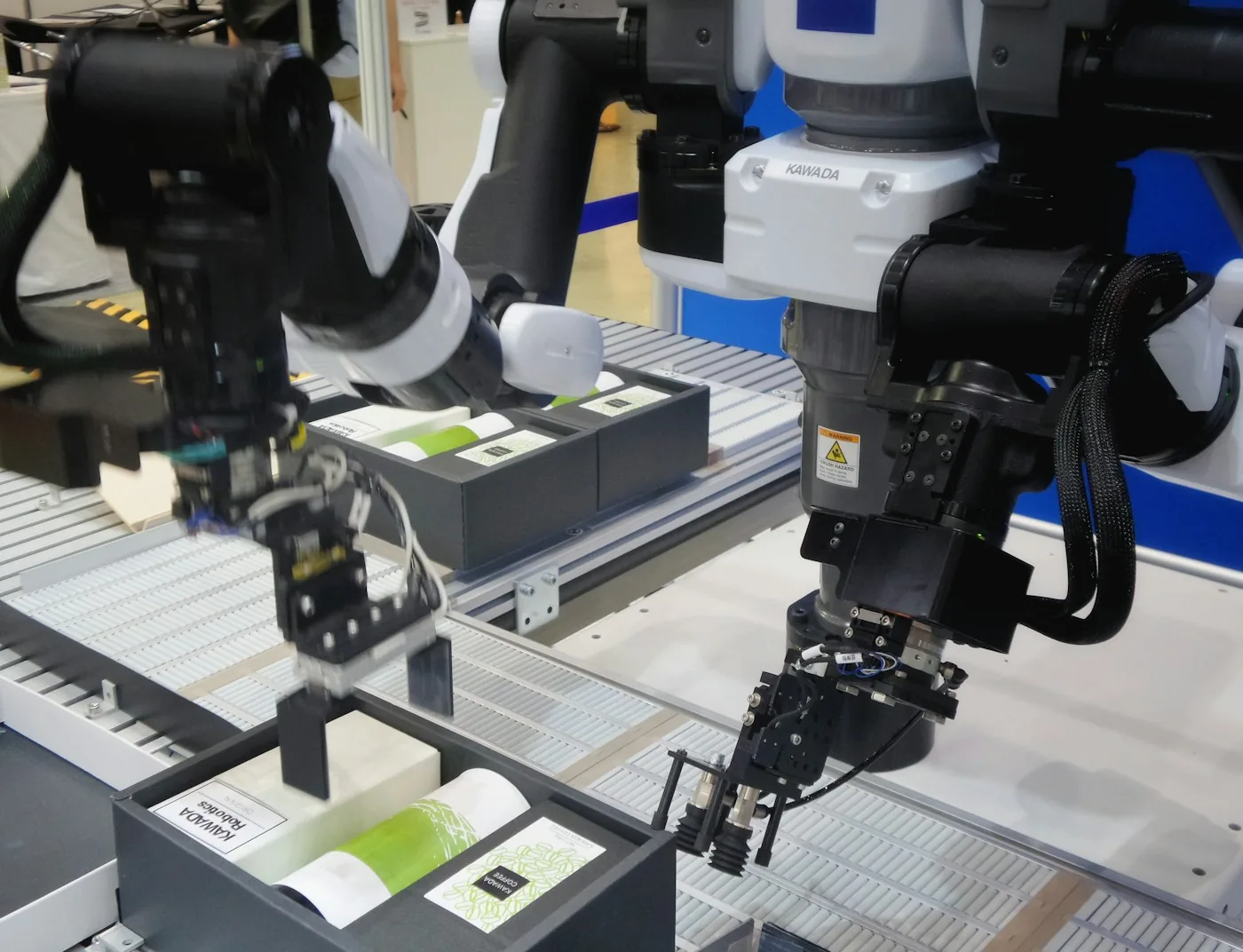


AI software development produces five product types. Each type pairs a model family with one job inside the product. Custom AI software development then fits that pairing to one organization's data, users and approval rules.
AI product development for an external market adds tenant isolation, usage metering and per-customer cost tracking. All five types share one trait: model output drives the core workflow. That trait separates AI software development from conventional builds and from AI added to existing systems.
03 / AI SOFTWARE DEVELOPMENT
The starting point and core logic decide the route. A new AI-native product needs model evaluation and inference controls as well as software engineering.
| Attribute | Conventional custom software | AI software development | AI integration |
|---|---|---|---|
| Starting point | New system | New system built around a model | Existing application |
| Core logic | Coded business rules | Model output plus coded rules and fallbacks | Model call added to existing logic |
| Test method | Expected output per test case | Evaluation set with accuracy thresholds | Evaluation set plus existing regression tests |
| Running cost | Hosting and maintenance | Hosting plus per-request inference | Inference added to current hosting |
| Release triggers | Code changes | Code, prompt, model version or data changes | Model or prompt changes |
AI software development differs from conventional software development in how logic is defined and tested. It differs from AI integration in its starting point: a new product instead of an existing application.
Custom software development remains the right route when fixed rules describe the task completely, such as approval limits or tax calculations. AI application development fits tasks that involve language, images or patterns that coded rules do not capture. Model-driven logic also changes how the product is layered.
04 / AI SOFTWARE DEVELOPMENT
The model is one layer. Data, orchestration, application code, evaluations and observability make it useful under real traffic.

Choose a provider model, private open-weight model or trained model against your evaluation set.
Clean, permission and index the source data the task needs.
Manage prompts, tools and model routing.
Build screens, APIs, authentication and business rules.
Test releases and validate responses before users see them.
Track quality, latency, drift and cost per request.
AI-native software runs on six layers. Only one layer holds the model. Five other layers decide whether the product holds up under production traffic.
Model layer: a foundation model through a provider API, an open-weight model on private infrastructure set up through cloud engineering, a fine-tuned model or a custom-trained machine learning model.
Data and retrieval layer: pipelines that clean and permission source data, plus a vector index for retrieval-augmented generation when answers draw on company documents.
Orchestration layer: prompt templates, tool calls and routing rules that send simple requests to smaller models.
Application layer: screens, APIs, authentication and the business rules around each model call.
Evaluation and guardrail layer: evaluation sets, input filters and output validators that check each response before users see it.
Observability layer: traces, sampled quality scores, latency, drift signals and cost per request.
Each model call needs a fallback path as well. Coded rules, a cached answer or a human review queue take over when the model times out or scores below its threshold. Enterprise AI architecture shows how these six layers connect to existing data platforms and identity systems.
05 / AI SOFTWARE DEVELOPMENT
Evaluation evidence decides whether work advances. Build in increments, test model changes and release first in shadow mode, then to limited cohorts.

Code, prompt, model and data changes all trigger evaluation. Shadow runs and limited cohorts help compare results with the original baseline.
Passing a gate supports the next review; it does not replace release ownership. Input changes require another evaluation. Nothing is deployed by this interaction.
AI software development moves through eight steps, from task framing to production monitoring. Evaluation evidence decides whether work advances from one step to the next. This sequence follows the standard software life cycle with AI-specific processes added for data, model evaluation and continuous validation. ISO/IEC 5338:2023 defines life cycle processes for AI systems based on machine learning and heuristic systems.
Task framing. Product owners and engineers define the user task, the decision it supports and the error rate the business accepts. Current manual performance becomes the baseline.
Data audit and evaluation set. Engineers confirm data access, permissions and quality. Subject-matter experts label real cases with correct answers to form the evaluation set.
Model strategy spike. Engineers test two or three model options against that evaluation set. Accuracy, latency and cost per request decide the choice.
Interaction design. Designers decide where model output appears, how confidence shows and how users correct or override a result. Target users test the flow before production code starts.
Product build in increments. Engineers build the application, data pipelines and guardrails in short sprints. Each increment runs against the evaluation set.
Evaluation-gated testing. Each prompt, model or data change re-runs the evaluation set and fails the build below threshold. Large language model evaluation methods measure factual accuracy and safety. Software testing covers functional, integration and load behavior in parallel.
Staged release. Shadow mode runs the model beside the current process without changing outcomes. Limited user cohorts follow, with results compared against the step 1 baseline.
Production monitoring. Dashboards track quality samples, drift, latency and cost per request. Engineers pin model versions and re-run the evaluation set before adopting a provider's newer model.
06 / AI SOFTWARE DEVELOPMENT
Data preparation and integrations shape the build. Inference, quality review and controlled model updates shape the cost after launch.
Cost driver
How engineers control it
Label the cases the evaluation set needs and reuse labels across model tests
Cost driver
How engineers control it
Test smaller or open-weight models on the same evaluation set before choosing
Cost driver
How engineers control it
Start with read-only access and add write-back only where the workflow requires it
Cost driver
How engineers control it
Route simple requests to smaller models, cache repeated answers and trim retrieved context
Cost driver
How engineers control it
Review sampled outputs instead of every response
Cost driver
How engineers control it
Pin model versions and retrain on drift signals rather than a fixed calendar
INFERENCE BUDGET
Multiply measured cost per request by expected monthly requests. Plan hosting, integrations, monitoring and maintenance separately.
The figures below are illustrative inputs, not a price quote or provider rate.
AI software development cost splits into build cost and running cost. Running cost grows with usage. Design decisions made during the build set its level.
Measured cost per request from the model strategy spike, multiplied by expected monthly requests, gives the inference budget before launch.
07 / AI SOFTWARE DEVELOPMENT
Model changes, shifting inputs and unsupported answers need explicit controls. Name an owner for the product and its release decisions.
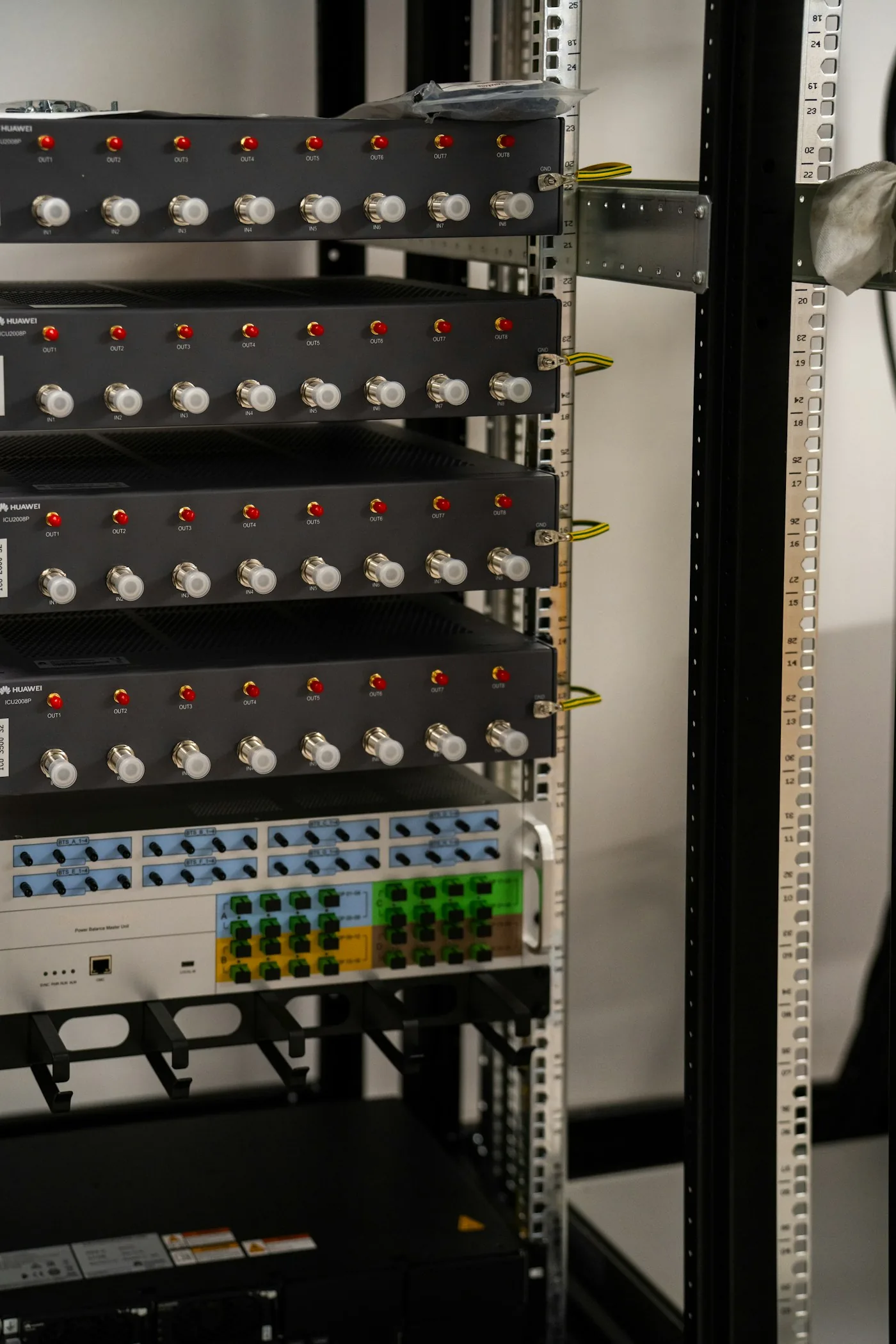
Pin versions where available and re-evaluate before switching models.
Compare live inputs with the evaluation distribution and alert the owner.
Retrieve cited sources and validate against records.
Show uncertainty and require review for high-impact actions.
Track dataset origin and permitted training or fine-tuning use.
AI software products carry risks that conventional applications do not: outputs that drift, models that change underneath the product and users who trust results without checking them.
Provider model changes. Model providers update and retire hosted models on their own schedules. Version pinning and an evaluation re-run before each switch keep product behavior stable.
Data drift. Input data shifts as products, customers or document formats change. Drift monitors compare live inputs with the evaluation distribution and alert the model owner.
Ungrounded output. Generated text can state facts that no source supports. Retrieval with citations and validation against source records reduce unsupported answers.
Over-reliance by users. Users accept model output unchecked when interfaces show no uncertainty. Confidence cues and mandatory review for high-impact actions keep a person accountable.
Unclear data rights. Training and fine-tuning data can carry license or privacy restrictions. Data lineage records show the source and permitted use of each dataset.
Under AI governance, named owners review these controls on a fixed cycle and approve each model change.
08 / AI SOFTWARE DEVELOPMENT
Use AI software development when you want a new product with a measurable task and representative data. Existing workflows may need a smaller, focused service instead.

AI software development fits a task that repeats at volume, has a measurable outcome and has representative data behind it. Ownership matters too: the organization wants a new product of its own. Other AI needs map to sibling services:
Adding a model to an existing CRM, ERP or service desk: AI integration.
Placing an assistant inside an application staff already use: AI copilot development.
Letting software plan steps and call tools across systems: agentic AI development.
Extracting fields from invoices, forms and contracts at volume: AI document intelligence.
Scoring risk or forecasting demand inside an existing decision workflow: AI decision intelligence.
Combining software bots with models on a mapped business process: intelligent automation.
Answering staff questions from company documents with citations: enterprise AI search and knowledge retrieval.
Choosing which AI idea deserves funding first: AI consulting and strategy.
Once the product fit is confirmed, the next decision concerns who builds it.
09 / AI SOFTWARE DEVELOPMENT
Outsource a product, use a dedicated team or add specialists to your own group. Keep responsibility for evaluation and release explicit in each arrangement.

Organizations source AI software engineering in three ways. They outsource the full product, run a dedicated product team or add remote AI software engineers to an in-house team. Delivery risk sits with whoever owns the task definition and release decisions.
Companies outsource AI software development when no internal product owner can run model, evaluation and release decisions. Roadmaps with two or more AI products on shared data pipelines call for a dedicated team. Companies that hire AI software developers into an existing team keep those decisions in-house and add build capacity. AI software product teams typically include these roles:
AI software architect: sets the layer design, model strategy and fallback paths.
AI product manager: owns the task definition, acceptance threshold and release decisions.
Machine learning or LLM engineer: builds prompts, retrieval, fine-tuning and evaluation sets.
Full-stack engineer: builds the screens, APIs and business rules around each model call.
Product designer: designs confidence cues, correction flows and fallback screens.
MLOps engineer: runs deployment, version pinning, monitoring and cost dashboards.
10 / AI SOFTWARE DEVELOPMENT
Understand ownership, provider changes, controlled learning and how use cases affect regulatory obligations.
Clients own the product code, prompts, evaluation sets and fine-tuned model weights when the development contract assigns them. Foundation models stay under their provider's license. Open-weight models follow their published license terms. Some of those licenses restrict commercial use. Contract review settles ownership of each artifact before the first sprint starts.
Yes. Switching works when the product calls models through an abstraction layer and keeps its own evaluation set. Engineers run that evaluation set against the new model. Accuracy, latency and cost per request show whether the switch holds. Prompt adjustments follow before cutover. Products that hard-code one provider's API need refactoring before any switch.
No. Deployed models change only when engineers retrain them, fine-tune them or update prompts and retrieval data. User corrections become training data only after human review. Each controlled update passes the same evaluation set before release. Unreviewed self-learning would leave product behavior untestable between releases.
Yes, depending on the use case and the market served. Annex III of the EU AI Act lists uses such as recruitment screening and creditworthiness assessment as high-risk. High-risk systems carry obligations for risk management, logging, human oversight and accuracy. Products serving EU users map each feature to a risk class during task framing.
11 / AI SOFTWARE DEVELOPMENT
Compare two or three model options on your task before funding a full build. Use the results to scope the surrounding product layers.

Bring one AI product idea and a sample of real cases from the task it targets. AppsGlobal runs a model strategy spike on that sample. You receive an evaluation set built from your cases, measured accuracy, latency and cost per request for two or three model options and a build recommendation with the product layers it requires. Those results give any AI software development company, including ours, measured numbers to quote the build against.