
Modular monolith first
One deployable application with strict module boundaries keeps early development simple. Modules that later need independent scaling can split into services along those boundaries.
YOUR WORKFLOW • YOUR DATA • YOUR RULES
Build around the way your business works.
Turn workarounds into a maintainable application—from discovery and clickable prototypes to MVP releases, go-live and handover.
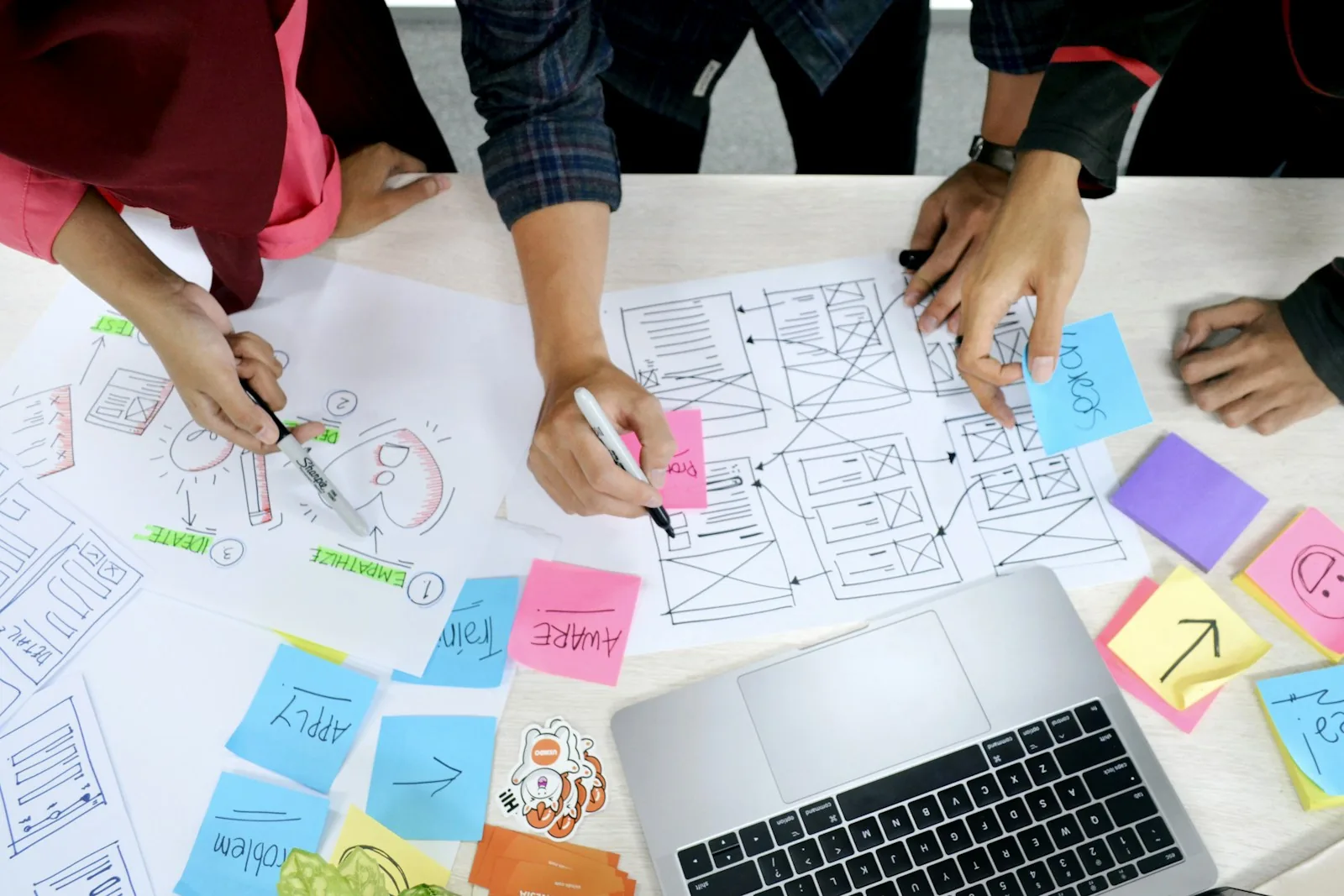
THE STARTING POINT
Custom applications carry your entities, relationships and rules. Use them where configured products stop matching the work—and keep standard functions in packaged tools where they fit.
Workarounds pile up when packaged software leaves out the steps your business runs on.
Custom software development from AppsGlobal builds an application around your own workflow, data and rules.
Custom software development is a type of software development that produces one application for one organization's workflows, data and business rules. Requirements analysis, data modeling, architecture, coding, testing and deployment make up the work. Operations platforms, customer portals, partner applications and scheduling or quoting tools are typical builds, also known as bespoke software development. Each finished application carries a data model and business logic that match the organization that commissioned it. That fit separates custom software from a packaged product configured to approximate the same work.
AppsGlobal provides custom software development services as one of its software engineering services. Each build is one form of enterprise software development: a new system added to the applications an organization already runs. Custom builds start where configured SaaS products and low-code platforms stop matching the work.
01 / CUSTOM SOFTWARE DEVELOPMENT
Look for a distinctive process, a missing data model or limits in integrations, licensing and required controls.

Pricing logic, underwriting rules, dispatch rules or approval chains give the business its edge. Packaged products replace that logic with a vendor-standard version that every competitor can buy.
Multi-party contracts, equipment hierarchies or nested service agreements have no native place in the product. Teams then store them in custom fields, attachments and side spreadsheets that standard reports skip.
The system must exchange data with internal databases, legacy tools or partner APIs that the vendor's connectors do not cover. Each gap becomes a manual export or a fragile script.
Partners, field staff and customers need access. Each new user adds a license fee. Custom business software carries hosting and maintenance costs instead of per-user charges.
Audit trails, data residency, retention schedules or approval records follow rules the vendor does not configure. Missing controls leave compliance checks to manual review.
Custom software development fits when the workflow itself sets the business apart or when the data model has no equivalent in packaged products. Licensing, integration and compliance limits can make configuration cost more than building. Five signals point to that situation.
Differentiating workflow. Pricing logic, underwriting rules, dispatch rules or approval chains give the business its edge. Packaged products replace that logic with a vendor-standard version that every competitor can buy.
Missing data structures. Multi-party contracts, equipment hierarchies or nested service agreements have no native place in the product. Teams then store them in custom fields, attachments and side spreadsheets that standard reports skip.
Unsupported integrations. The system must exchange data with internal databases, legacy tools or partner APIs that the vendor's connectors do not cover. Each gap becomes a manual export or a fragile script.
Per-seat cost growth. Partners, field staff and customers need access. Each new user adds a license fee. Custom business software carries hosting and maintenance costs instead of per-user charges.
Compliance logic the product lacks. Audit trails, data residency, retention schedules or approval records follow rules the vendor does not configure. Missing controls leave compliance checks to manual review.
One signal alone rarely justifies a build. Two or more signals at once usually do. Organizations whose current system already works but blocks change are a different case, which software modernization handles without starting from zero.
02 / CUSTOM SOFTWARE DEVELOPMENT
Explore configured SaaS, low-code and custom software across the same seven factors. A hybrid approach may combine them.



Configured SaaS, low-code platforms and custom software development differ mainly in control: who defines the data model, where business logic runs and what happens when the organization wants to leave. Price and launch speed in custom application development follow from that control.
Custom software vs off-the-shelf is often a mixed decision rather than a binary one. Hybrid setups keep a SaaS product for standard functions, such as accounting or email. Custom modules then handle the differentiating step, such as a pricing engine that writes results back to the ERP.
| Factor | Configured SaaS | Low-code platform | Custom software development |
|---|---|---|---|
| Data model | Vendor schema with custom fields | Platform objects with limited relationships | Designed for the organization's entities |
| Business rules | Configuration options the vendor exposes | Visual logic up to the platform's ceiling | Coded rules of any complexity |
| Integration options | Vendor connectors and published APIs | Prebuilt connectors, limited custom code | Any API, protocol or database |
| Hosting and data location | Vendor cloud and regions | Platform cloud | Client-chosen cloud or on-premises |
| Release control | Vendor release schedule | Platform release schedule | Client-approved releases |
| Exit path | Data export, workflows rebuilt elsewhere | Applications tied to the platform runtime | Source code and data move with the client |
| Launch speed | Days to weeks | Weeks | Months, released in increments |
03 / CUSTOM SOFTWARE DEVELOPMENT
Eight steps turn a business workflow into a tested application, with reviewable outputs and a planned handover.

Review role permissions, exceptions and state changes before coding. Acceptance criteria then become the basis for testing each increment.
Only the requester submits. Only the approver approves. Only finance invoices an approved order.
No state changes recorded yet.
Custom software development runs in eight steps. Each step produces an artifact the next step depends on. Requirements engineering follows practices such as those in ISO/IEC/IEEE 29148:2018, which specifies requirements processes and the information items they produce.
Discovery workshops. Engineers and business owners map the current workflow, the people involved and each workaround. Output: a process map and a list of pain points ranked by impact.
Requirements specification. User stories and acceptance criteria describe what each role must be able to do. Output: a prioritized backlog with measurable acceptance tests.
Domain model and data design. Entities, relationships and state changes are defined, such as an order moving from draft to approved to invoiced. Output: a data model and state diagram.
Architecture and clickable prototype. Architects choose the structure, hosting and integration points. Designers build a clickable prototype that users test before any code is written.
MVP increments. Developers release a minimum viable product (MVP) first, then add features in time-boxed sprints. Each increment runs in a test environment for user feedback.
User acceptance testing. Business users test each release against the acceptance criteria from step 2. Defects return to the backlog with a priority.
Data migration and go-live. Records from spreadsheets or old systems are cleaned, mapped and loaded in rehearsed runs. Cutover happens after a final rehearsal passes.
Hypercare and handover. Engineers monitor the live system closely during an agreed warranty period. Source code, documentation and runbooks transfer at the end.
Early steps in the custom software development process change cost and schedule less than later ones. Catching a misunderstood rule in a prototype costs a design change, while catching it after go-live costs code, data and retraining.
04 / CUSTOM SOFTWARE DEVELOPMENT
Start with clear module boundaries. Add service separation, tenancy and shared APIs where the requirements justify them.
One deployable application with strict module boundaries keeps early development simple. Modules that later need independent scaling can split into services along those boundaries.
Independent services suit systems with separate scaling profiles or two or more teams releasing on different schedules. They add network calls, distributed data and monitoring work.
Tenant isolation at the database, schema or row level decides how one customer's data stays separate from another's.
Defining APIs before screens lets web, mobile and partner channels use the same business logic. Those APIs later serve reporting tools and features built through AI solutions and engineering.
Architecture choices made in the first weeks of custom software development decide how expensive later changes become. Four decisions carry most of that weight.
Modular monolith first. One deployable application with strict module boundaries keeps early development simple. Modules that later need independent scaling can split into services along those boundaries.
Microservices when scale or teams demand them. Independent services suit systems with separate scaling profiles or two or more teams releasing on different schedules. They add network calls, distributed data and monitoring work.
Multi-tenancy for products sold to other companies. Tenant isolation at the database, schema or row level decides how one customer's data stays separate from another's.
API-first design. Defining APIs before screens lets web, mobile and partner channels use the same business logic. Those APIs later serve reporting tools and features built through AI solutions and engineering.
These decisions also shape the budget, since architecture determines how much of the system each new feature touches.
05 / CUSTOM SOFTWARE DEVELOPMENT
Screens are only one cost driver. Permissions, exceptions, migration, integrations and operating targets shape the estimate.

each role needs its own permissions, views and test cases.
pricing formulas, approval chains and exception paths multiply test scenarios.
each connected system adds mapping, error handling and monitoring.
volume, duplicates and inconsistent formats in old records decide cleansing effort.
audit logs, encryption, retention and access reviews add design and testing work.
expected concurrent users set infrastructure size. Uptime targets set load-testing depth.
Custom software development cost depends on how much logic, data and connection the system carries, not on the number of screens alone. Six drivers set most estimates:
User roles and screens: each role needs its own permissions, views and test cases.
Business-rule complexity: pricing formulas, approval chains and exception paths multiply test scenarios.
Integrations: each connected system adds mapping, error handling and monitoring.
Data migration: volume, duplicates and inconsistent formats in old records decide cleansing effort.
Compliance controls: audit logs, encryption, retention and access reviews add design and testing work.
Performance and availability targets: expected concurrent users set infrastructure size. Uptime targets set load-testing depth.
Timeline follows the same drivers. Releasing an MVP first puts working software in front of users early, while later increments add the remaining scope. Firm estimates follow discovery, once the backlog and data model exist.
06 / CUSTOM SOFTWARE DEVELOPMENT
Agree change control, acceptance criteria, client-controlled accounts and documentation before the build starts.

How it appears: New requests enter sprints without trade-offs
Control: Change requests priced and prioritized against the backlog
How it appears: Built features miss how users work
Control: Clickable prototypes and acceptance criteria signed before coding
How it appears: One developer holds critical knowledge
Control: Code review, pair work and architecture decision records
How it appears: Client has no practical way to move maintenance elsewhere
Control: Repository and cloud accounts held in the client's name, with an IP assignment clause
How it appears: Shortcuts slow later releases
Control: Definition of done that includes automated tests and documentation
Custom software development carries five recurring risks. Each one has a specific control agreed before the build starts.
Ownership terms need precise wording. Development contracts commonly assign newly written code to the client, license the developer's pre-existing libraries (background IP) and leave open-source components under their own licenses.
| Risk | How it appears | Control |
|---|---|---|
| Scope creep | New requests enter sprints without trade-offs | Change requests priced and prioritized against the backlog |
| Misread requirements | Built features miss how users work | Clickable prototypes and acceptance criteria signed before coding |
| Key-person dependency | One developer holds critical knowledge | Code review, pair work and architecture decision records |
| Developer lock-in | Client has no practical way to move maintenance elsewhere | Repository and cloud accounts held in the client's name, with an IP assignment clause |
| Technical debt | Shortcuts slow later releases | Definition of done that includes automated tests and documentation |
07 / CUSTOM SOFTWARE DEVELOPMENT
Web, mobile, API, cloud, testing and DevOps services support the new system through release and operation.
Custom software reaches users through delivery channels that sibling services engineer in depth. Web development builds browser interfaces and portals for the new system. Mobile app development extends the same logic to field staff and customers on iOS and Android. API integration connects the build to ERP, CRM and partner systems.
Quality, hosting and release work run alongside the build. Cloud engineering provisions the hosting environment as infrastructure as code before the first increment ships. Software testing automates regression suites from the acceptance criteria. DevOps sets up the pipeline that moves each increment into production. Ready application classes such as CRM, HRMS and ERP sit under enterprise application solutions, and software engineering principles explain the design reasoning behind these choices.
08 / CUSTOM SOFTWARE DEVELOPMENT
Choose an accountable delivery team or add developers to a backlog your own product owner directs.
Architecture, project management and quality control support a build from discovery to handover.
Add development capacity when you already have engineering leadership and a working delivery process.

sets the domain model, module boundaries and integration contracts.
writes user stories and acceptance criteria with the business owners.
builds the clickable prototype that users test before coding.
build the backend services, APIs and screens in each sprint.
automate tests and run the release pipeline.
Outsourcing custom software development hands the full build to a provider, from discovery workshops to handover. Hiring custom software developers adds engineers to a team that the client's own product owner directs. Ownership of delivery risk follows that choice.
Outsourcing suits organizations without an in-house engineering lead because the provider supplies architecture, project management and quality control. Hiring remote custom software developers suits organizations that already run a backlog and need more build capacity. Custom software development team roles for a new system typically include:
Software architect: sets the domain model, module boundaries and integration contracts.
Business analyst: writes user stories and acceptance criteria with the business owners.
UX designer: builds the clickable prototype that users test before coding.
Developers: build the backend services, APIs and screens in each sprint.
QA and DevOps engineers: automate tests and run the release pipeline.
Both routes still depend on the same discovery outputs, so the first workshop serves either decision.
09 / CUSTOM SOFTWARE DEVELOPMENT
Agree client responsibilities, takeover conditions, hybrid SaaS boundaries and security verification.
Clients provide a product owner with decision authority, subject-matter experts for each workflow, sample data and access to systems the build must connect to. Product owner availability sets the pace because unanswered questions stop sprints. Timely acceptance decisions after each increment keep defects from accumulating across releases.
Yes. Takeover works when the repository, cloud accounts and pipelines already sit in the client's name. Current documentation and automated tests complete the conditions. Knowledge transfer then runs as paired work on live tickets. Missing tests or undocumented integrations extend that transition period.
Yes. Custom modules connect to SaaS products through their published APIs, webhooks and data exports. SaaS products keep standard functions, such as accounting or CRM records. Custom modules handle the differentiating workflow. API rate limits and the vendor's data model set the boundaries of that design.
Security is verified against a published standard rather than assumed. OWASP's Application Security Verification Standard (ASVS) defines three verification levels with testable requirements for authentication, access control, input handling and logging. Cybersecurity engineers add threat modeling at design and dependency scanning in the pipeline for risks specific to the build.
10 / CUSTOM SOFTWARE DEVELOPMENT
Bring the spreadsheets, repeated data entry and manual approvals. Leave with a workflow, MVP scope and architecture outline.

List the workarounds your team runs today: the spreadsheets, re-keyed records and manual approvals. AppsGlobal runs a discovery workshop on that list and returns three outputs: a mapped workflow, a prioritized MVP scope and an architecture outline with integration points. Those outputs give any custom software development company, including ours, a fixed basis for estimating the build.