
Reason codes
Describe the main factors in business terms.
FORECASTING, SCORING & OPTIMIZATION
Put the forecast, the reasons and the next action together.
Bring forecasts, risk scores and next-best actions into the screens where pricing, staffing and operational decisions happen—with clear factors and human oversight.

THE STARTING POINT
BI shows what happened. Decision intelligence predicts outcomes for recurring choices and puts a scored recommendation beside the decision—with uncertainty, contributing factors and oversight.
Monthly spreadsheet forecasts still set this week's prices, credit limits and staff rosters. AI decision intelligence scores each decision on current data and shows the reasons beside the recommendation.
AI decision intelligence is the AI engineering service that applies machine learning, forecasting and optimization models to recurring business decisions. Its models predict the outcome of each available option and recommend one action per case. Covered decisions include demand forecasts, credit limits, claim triage, price changes and staff schedules. Each recommendation reaches the decision screen as a scored option with a predicted outcome, a confidence range and the factors behind the score. Staff approve high-impact actions. Business rules apply low-impact actions within set limits.
Decision intelligence differs from business intelligence (BI) reporting. BI dashboards show what happened. Decision intelligence predicts what each option will produce and attaches that prediction to the decision itself. AppsGlobal builds decision intelligence services as part of AI solutions and engineering, placing models inside the enterprise software where decisions are recorded.
01 / DECISION INTELLIGENCE
Recurring decisions need current inputs, useful forecasts, workflow integration and ongoing review. A score helps only when people can act on it.

Use data available when the decision happens, rather than month-end extracts.
Include promotions, seasonality and calendar effects where they matter.
Put the recommendation in the screen where staff decide.
Monitor performance as products, customers and conditions change.
Show the factors behind each recommendation and record overrides.
Recurring business decisions lose accuracy at five points. Stale inputs, simple forecasting methods, scores outside the workflow, drifting models and unexplained scores each separate the data from the action. Planners, underwriters and buyers then act on numbers that no longer match the market. Margins, credit losses and service levels absorb the gap.
Pricing, purchasing and staffing teams decide from spreadsheets refreshed once a month. Demand shifts, competitor price changes and supplier delays appear in the data weeks before the next refresh. Buyers then order against outdated demand. Stores carry surplus stock of slow items while fast items sell out. Planners spend the first days of each cycle rebuilding the same workbook.
Moving averages and last-year-plus-growth formulas treat each product line as one smooth series. Promotions, holidays, price changes and local events fall outside those forecasts. Forecast error grows at the store and item level, where replenishment decisions happen. M5, a forecasting competition built on 42,840 hierarchical Walmart sales series, drew 5,507 teams. Its organizers reported in 2022 that the top five methods improved accuracy by more than 20 percent over the best statistical benchmark.
Analytics teams publish scores to dashboards outside the CRM, ERP or claims system. Staff deciding a case must switch screens, find the record and copy the score. Busy queues skip that step. Model output then has no effect on the decision it was built for. Salesforce's 2025 survey of 552 US business decision makers found that 90 percent said direct data access in their most-used apps would improve their performance.
Decision models learn from past customer, price and market behavior. Rate changes, new products and new competitors shift that behavior. Scores then degrade without visible errors. Approvals, prices or stock levels move away from target before anyone reviews the model. SR 11-7, the Federal Reserve's 2011 model risk guidance, called it essential to evaluate whether changes in products, exposures, activities, clients or market conditions require adjusting, redeveloping or replacing a model. SR 26-2 superseded and replaced SR 11-7 on April 17, 2026.
Black-box scores return a number without the factors behind it. Underwriters, claims handlers and planners override scores they have no way to check. Regulated decisions add a legal requirement. The historical Circular 2022-03 from the Consumer Financial Protection Bureau stated that creditors using complex algorithms must still give applicants the specific principal reasons for an adverse action. The CFPB withdrew Circular 2022-03 on May 12, 2025; it is not current guidance.
Each gap points to a design choice: current inputs, methods that read promotions and calendars, scores inside the workflow, scheduled monitoring and reasons attached to each score. AI decision intelligence combines those choices differently for each decision type.
02 / DECISION INTELLIGENCE
Explore forecasting, risk scoring, ranking, optimization and recommendations. Production workflows often combine more than one.





AI decision intelligence covers five decision types. Each type uses its own model family and returns its own output.
Production decisions chain two or more types. Demand forecasts feed a replenishment optimizer. Fraud scores feed a ranked review queue.
03 / DECISION INTELLIGENCE
Use support for human decisions, augmentation for approved recommendations and bounded automation for low-impact, reversible work. Explore a fictional reorder below.
ASSUMED INVENTORY INPUTS
This simple rule illustrates oversight. A production model needs calibrated forecasts, business constraints and backtesting.
60 expected + 10 safety − 25 in stock
The quantity and its factors support review. No order is recorded in this mode.
Review the proposed quantity, then approve it in this example.
Automation level sets who acts on a model's output. AI decision intelligence runs at three levels:
Decision support: model output shows a score with its main factors. A person makes the decision, as in underwriting review.
Decision augmentation: model output recommends one action. A person approves or overrides it, as in price change approval.
Decision automation: rules apply the recommended action within set limits and route exceptions to a person, as in approving low-value claims.
Impact and reversibility decide the level. Credit denials and clinical triage stay at support or augmentation. Reorder quantities for low-value items move to automation once forecast error holds within the agreed range.
04 / DECISION INTELLIGENCE
Map the decision, join past choices to their outcomes, test against the current method and place the result in the workflow.

Backtest past periods, integrate the recommendation and monitor a live model alongside a challenger.
Decision models move through six build steps. Each step ties the model closer to the decision it serves.
Decision mapping. Business owners document the decision, its options, its constraints and the outcome metric, such as margin, loss rate or service level.
Outcome data assembly. Data engineers join past decisions to their results. Each record holds the case, the option chosen and the outcome.
Feature engineering and training. Data scientists build features such as price history, seasonality and payment behavior. They then train candidate models.
Backtesting. Analysts replay past periods and compare each model's predicted outcomes with actual results and with the current method.
Workflow integration. Engineers place the score, its factors and the recommendation in the decision screen through API integration.
Champion-challenger monitoring. Each live model runs beside a challenger on a share of cases. Drift alerts start retraining.
05 / DECISION INTELLIGENCE
Staff should see what contributed to the score, how uncertain a forecast is and what was ultimately decided. Overrides become feedback for later model versions.
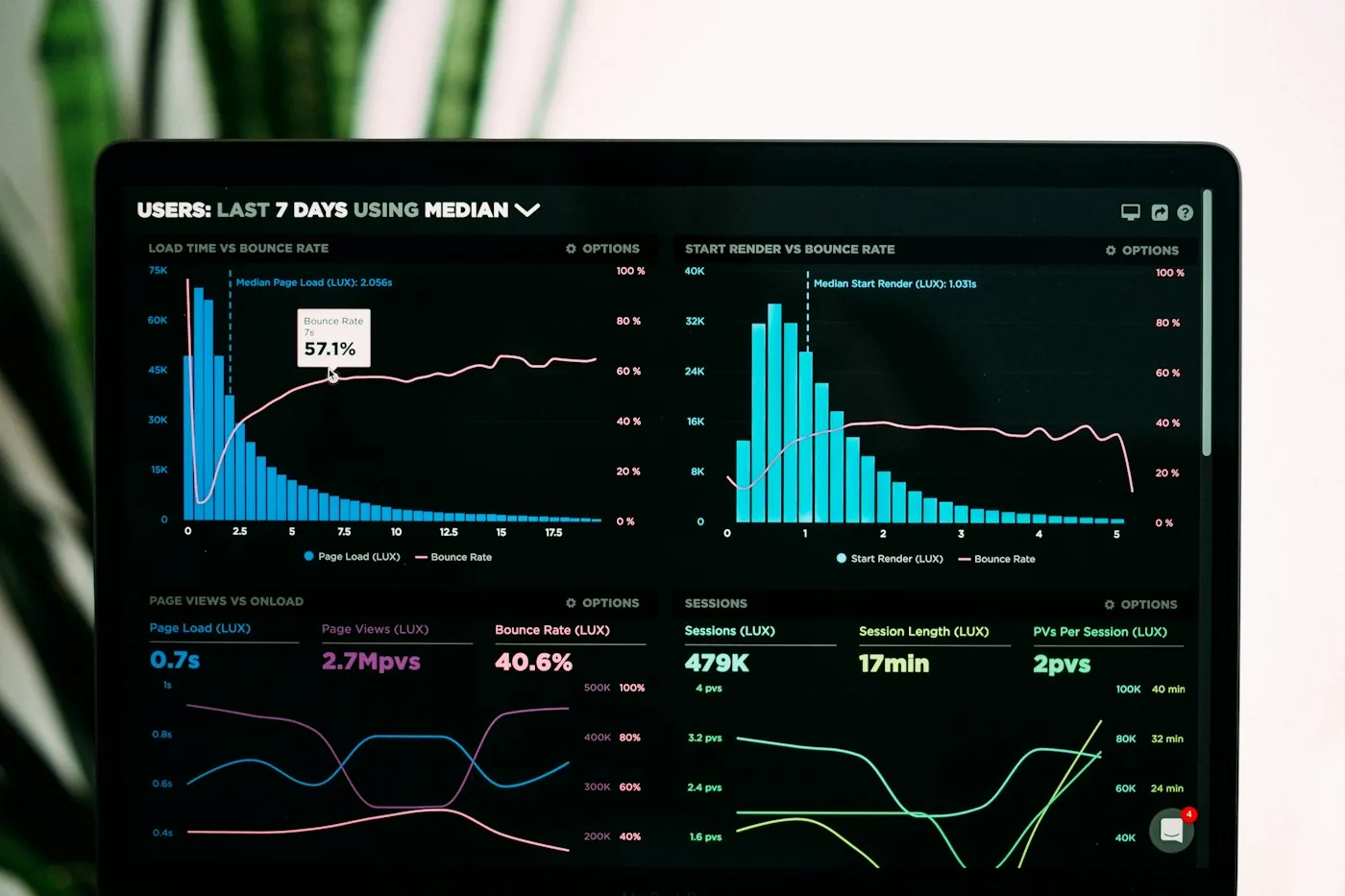
Describe the main factors in business terms.
Show how inputs contributed to this case’s score.
Present a range around the estimate.
Record inputs, model version, recommendation and final action.
Capture why a person rejected the recommendation.
Explainability attaches the reasons for each score to the score itself. AI decision intelligence builds five explanation outputs:
Reason codes: the top factors behind a score, written in business terms.
Factor contributions: per-case weights from methods such as SHAP (Shapley additive explanations).
Forecast intervals: a low and high value around each forecast instead of one number.
Decision logs: inputs, model version, recommendation, final action and the person who acted.
Override records: the reason a person gave for rejecting a recommendation.
Override records double as training signals for the next model version. Ownership, approval and monitoring rules behind these outputs follow the principles in the AI governance guide.
06 / DECISION INTELLIGENCE
Start with a decision that repeats at volume and has a measurable outcome. The model, constraints and oversight depend on the industry.

store-item demand forecasts, markdown timing and replenishment quantities.
credit limits, collections prioritization and fraud alert ranking.
claim triage, fraud referral and renewal pricing.
appointment no-show prediction, nurse staffing levels and readmission risk flags for care teams.
maintenance scheduling, production planning and supplier risk.
load planning, delivery time prediction and carrier selection.
churn risk and retention offer selection.
case prioritization and inspection targeting.
AI decision intelligence use cases share one trait: a decision repeats at volume and leaves a measurable outcome. Industry examples include:
Retail and ecommerce: store-item demand forecasts, markdown timing and replenishment quantities.
Banking and lending: credit limits, collections prioritization and fraud alert ranking.
Insurance: claim triage, fraud referral and renewal pricing.
Healthcare: appointment no-show prediction, nurse staffing levels and readmission risk flags for care teams.
Manufacturing: maintenance scheduling, production planning and supplier risk.
Logistics: load planning, delivery time prediction and carrier selection.
Telecom and subscription software: churn risk and retention offer selection.
Public sector: case prioritization and inspection targeting.
07 / DECISION INTELLIGENCE
Pair the model metric with an operational outcome. Use holdout groups to compare the candidate method with the current approach.
Control cases keep the current method. Compare operational outcomes with cases using the candidate model.
| Decision type | Model measure | Business outcome measure |
|---|---|---|
| Forecast | Weighted absolute percentage error | Stockouts and surplus stock |
| Risk score | Discrimination and calibration | Loss rate at a given approval rate |
| Ranking | Lift in the top decile | Amount recovered per collector hour |
| Optimization | Constraint violations | Cost per shift or per route |
| Recommendation | Acceptance rate | Revenue per contact |
AI decision intelligence is judged on business outcomes, with model accuracy as a supporting measure. Each decision type pairs one model measure with one outcome measure:
Holdout groups separate cause from coincidence. Control cases keep the current method. Analysts compare outcomes between the two groups.
08 / DECISION INTELLIGENCE
A useful decision model needs past outcomes, enough repeated cases and inputs available at the right moment. One-off strategic choices are better suited to scenario analysis.

Use this to prepare a backtest discussion. Checked items are your own assessment, not a data-quality certification.
Decision models need outcome history, decision volume and inputs available at decision time. Five checks decide readiness:
Outcome history: past decisions linked to their results across at least one full seasonal cycle.
Decision frequency: a decision repeated daily or weekly to give the model enough cases.
Input timing: each model input available when the decision is made, rather than in month-end reports.
Named owner: one business owner who accepts the outcome metric and the automation level.
Written constraints: budgets, capacity limits and policy rules stated as values the model respects.
One-off strategic choices, such as an acquisition or a market entry, lack outcome history. Those choices suit scenario analysis rather than a trained decision model.
09 / DECISION INTELLIGENCE
Document extraction can supply inputs. Automation, agents and copilots can help carry the approved action forward.
Extract income, invoice and claim fields for the model.
AI Document Intelligence ↗Apply approved decisions inside claims, invoices and onboarding.
Intelligent Automation ↗Use scoped agents when follow-up spans several tools.
Agentic AI Development ↗Connect a model result to the application where staff decide.
AI Integration ↗Help staff ask questions about a recommendation.
AI Copilot Development ↗Ground decision context in permission-aware company sources.
Enterprise AI Search & Knowledge Retrieval ↗Create a new product around the decision model.
AI Software Development ↗Rank decision projects alongside other AI candidates.
AI Consulting and Strategy ↗AI decision intelligence produces the score. Other AI services supply its inputs or carry the chosen action forward.
Income, invoice and claim fields extracted by AI document intelligence become risk-model inputs.
Approved decisions run inside invoice, claims and onboarding flows built with intelligent automation.
Agents from agentic AI development carry a recommendation across systems when the follow-up spans two or more systems.
One score added to one existing screen is a job for AI integration.
Staff questions about a score get answered inside daily tools through AI copilot development.
Policy text behind a decision rule comes from enterprise AI search and knowledge retrieval.
Products sold on the strength of a model belong to AI software development.
Decision use cases compete with other AI candidates for budget, and AI consulting and strategy sets their order.
10 / DECISION INTELLIGENCE
Decision owners, data specialists and domain leads define what a useful recommendation means—and how to evaluate it.

Decision intelligence teams combine modeling skill with knowledge of the decision itself. Credit risk, merchandising and workforce planning each carry their own rules and outcome metrics.
Organizations with a data platform and an analytics team hire data scientists to add decision models one use case at a time. Organizations without that base engage a decision intelligence company for the first model, its integration and its monitoring. Six roles make up the delivery team:
Decision product owner: defines the decision, outcome metric and automation level.
Data scientist: builds features, trains models and runs backtests.
Machine learning engineer: deploys models, schedules retraining and runs champion-challenger tests.
Data engineer: assembles outcome history and real-time inputs.
Optimization specialist: formulates constraints for scheduling, routing and pricing problems.
Domain lead: checks reason codes and overrides against credit, merchandising or clinical practice.
11 / DECISION INTELLIGENCE
Understand human accountability, historical data, real-time scoring and how decision intelligence differs from standalone optimization.
No. AI decision intelligence changes what people decide on, not who is accountable. Staff keep authority over high-impact and irreversible decisions, such as credit denials. Models take over high-volume, low-impact choices inside set limits. Override records keep people in control of the model itself. Each rejected recommendation feeds the next retraining cycle.
Decision models need outcome history across at least one full seasonal cycle per decision variant. Weekly retail forecasts need a full year of sales to learn holiday and promotion effects. Risk models need resolved cases, such as repaid and defaulted loans, on both sides of the outcome. Analysts confirm volume per variant during outcome data assembly.
Yes. Real-time scoring runs inside the transaction for decisions such as card fraud checks and checkout offers. Event streams deliver the latest inputs. Scoring finishes within the response-time budget of the payment flow. Planning decisions, such as weekly replenishment, run as scheduled batch jobs instead.
No. Prescriptive analytics is one component of decision intelligence. Prescriptive methods, such as optimization, recommend an action. Decision intelligence adds the surrounding layers: mapping the decision, predicting outcomes, placing results in the workflow and learning from overrides. Route optimizers without monitoring or outcome feedback stay standalone optimization tools.
12 / DECISION INTELLIGENCE
Bring a weekly reorder, queue-priority or similar decision. Compare a candidate model with your current method before committing to production.

Choose one decision your team makes each week, such as reorder quantities or collection order. AppsGlobal replays a past period of that decision with a candidate model. You receive predicted and actual outcomes beside your current method, the factors behind each recommendation and the data gaps that block production. Those backtest results show whether a model beats your current method before any build budget is committed.