Introduction
In today’s competitive online marketplace, ecommerce businesses must leverage the right tools to drive sales, improve customer experience, and streamline operations. One of the most effective ways to achieve this is through custom ecommerce software development. Unlike off-the-shelf solutions, custom ecommerce software is tailored to meet the unique needs of your business. This guide will explore the key aspects of custom ecommerce software development, its benefits, the development process, and why it’s an essential investment for businesses aiming to scale effectively.
Custom ecommerce software development enables businesses to create a platform that aligns with their specific goals, offering greater flexibility, enhanced security, and better scalability. From selecting the right development team to choosing the best technologies, this article will provide a detailed overview of everything you need to know about custom ecommerce solutions.
What is Custom Ecommerce Software?
Custom ecommerce software is a bespoke, tailor-made solution developed to meet the unique needs of an online business. It allows businesses to have full control over their ecommerce platform, from design to functionality. Unlike ready-made ecommerce platforms, which offer generic features, custom ecommerce software is built specifically to match a business’s brand, workflows, and operational processes.
This type of software is designed to integrate seamlessly with the business’s existing systems and can be continuously updated to align with growth and new technological trends. For companies with complex requirements or those aiming to differentiate themselves in a crowded market, custom ecommerce software provides the flexibility to add features that are not typically available in pre-built platforms.
Why Choose Custom Ecommerce Software?
Why should businesses opt for custom ecommerce software over pre-built platforms? The answer lies in the uniqueness and control it offers. Custom software provides several key advantages over traditional solutions.
Custom ecommerce software offers enhanced scalability, allowing businesses to grow without limitations. It also provides improved user experience, offering features that match the specific needs of your customers. Furthermore, with custom development, security measures can be more robust, protecting both business data and customer information.
Custom software also allows for streamlined operations, enabling businesses to integrate multiple systems like inventory management, order fulfillment, and customer relationship management (CRM) seamlessly. This makes it easier to track business performance, improve operational efficiency, and manage resources effectively. Learn more about our ecommerce services to see how we can help you create a custom solution tailored to your business needs.
Benefits of Custom Ecommerce Software Development
1. Tailored to Your Business Needs
Custom ecommerce software is designed specifically for your business, ensuring that every feature and functionality serves your operational needs. Whether you require unique payment gateways, custom product displays, or specialized inventory management systems, custom development offers flexibility that off-the-shelf solutions cannot provide.
With a tailored platform, businesses can enhance customer experience by offering personalized shopping journeys, specific product recommendations, and smoother checkout processes.
2. Scalability and Growth
As your business grows, so do your software needs. Custom ecommerce software is scalable, meaning it can evolve with your business, accommodating new products, categories, or services. Unlike pre-built solutions that might limit the number of products or users, custom software can grow to meet the demands of a growing customer base without compromising performance.
3. Competitive Advantage
In a saturated ecommerce market, differentiation is key. Custom ecommerce software allows businesses to create a platform that stands out, offering unique features that set them apart from competitors. Whether it’s a custom-designed user interface or innovative functionalities, custom software ensures your business is not constrained by the limitations of generic solutions.
4. Integration Capabilities
Custom software integrates seamlessly with your existing business systems, such as inventory management, accounting software, and CRMs. This integration allows for smoother workflows, better data synchronization, and greater efficiency. For businesses that use specialized tools for different operations, custom ecommerce software makes it easier to connect and manage these systems.
5. Enhanced Security
Security is a top concern for ecommerce businesses, as they handle sensitive customer data. Custom ecommerce software can be developed with advanced security protocols tailored to the specific needs of your business. By ensuring that security measures are built from the ground up, businesses can minimize the risk of data breaches, hacking, and other cyber threats.
The Custom Ecommerce Software Development Process
1. Discovery and Planning
The development process begins with thorough research and planning. During this phase, the development team collaborates with the business to understand its goals, requirements, and unique challenges. The objective is to identify the specific features and functionalities needed for the ecommerce platform and to outline the project scope.
2. Design and Prototyping
Once the requirements are defined, the design phase begins. In this step, wireframes and prototypes are created to visualize the look and feel of the platform. This ensures that the user interface (UI) and user experience (UX) are aligned with the brand’s identity and target audience. Feedback is gathered from stakeholders, and revisions are made to ensure the design meets expectations.
3. Development and Coding
Once the design is approved, the actual development of the custom ecommerce software begins. This phase involves writing the code, integrating necessary APIs, and building the backend and frontend of the platform. Depending on the complexity, this phase may take several months, with frequent testing and iteration to ensure the platform functions as intended.
4. Testing and Quality Assurance
Testing is a critical step in the development process. Every feature is tested for functionality, usability, and security. Quality assurance (QA) teams conduct thorough testing to ensure that the ecommerce platform is free of bugs and that all features work as expected.
5. Launch and Ongoing Maintenance
After testing, the custom ecommerce software is launched. However, the development process doesn’t end there. Ongoing maintenance is essential to ensure the platform remains secure, performs well, and evolves with business needs. Regular updates, security patches, and feature enhancements are necessary to maintain optimal functionality.
How Much Does Custom Ecommerce Software Development Cost?
When considering custom ecommerce software development, cost is a crucial factor to keep in mind. The cost of custom software development can vary significantly based on several factors, including the complexity of the features, the size of the project, and the experience of the development team.
Custom ecommerce platforms generally come with higher upfront costs compared to off-the-shelf solutions, but the investment pays off in the long run through increased flexibility, scalability, and the ability to meet specific business needs.
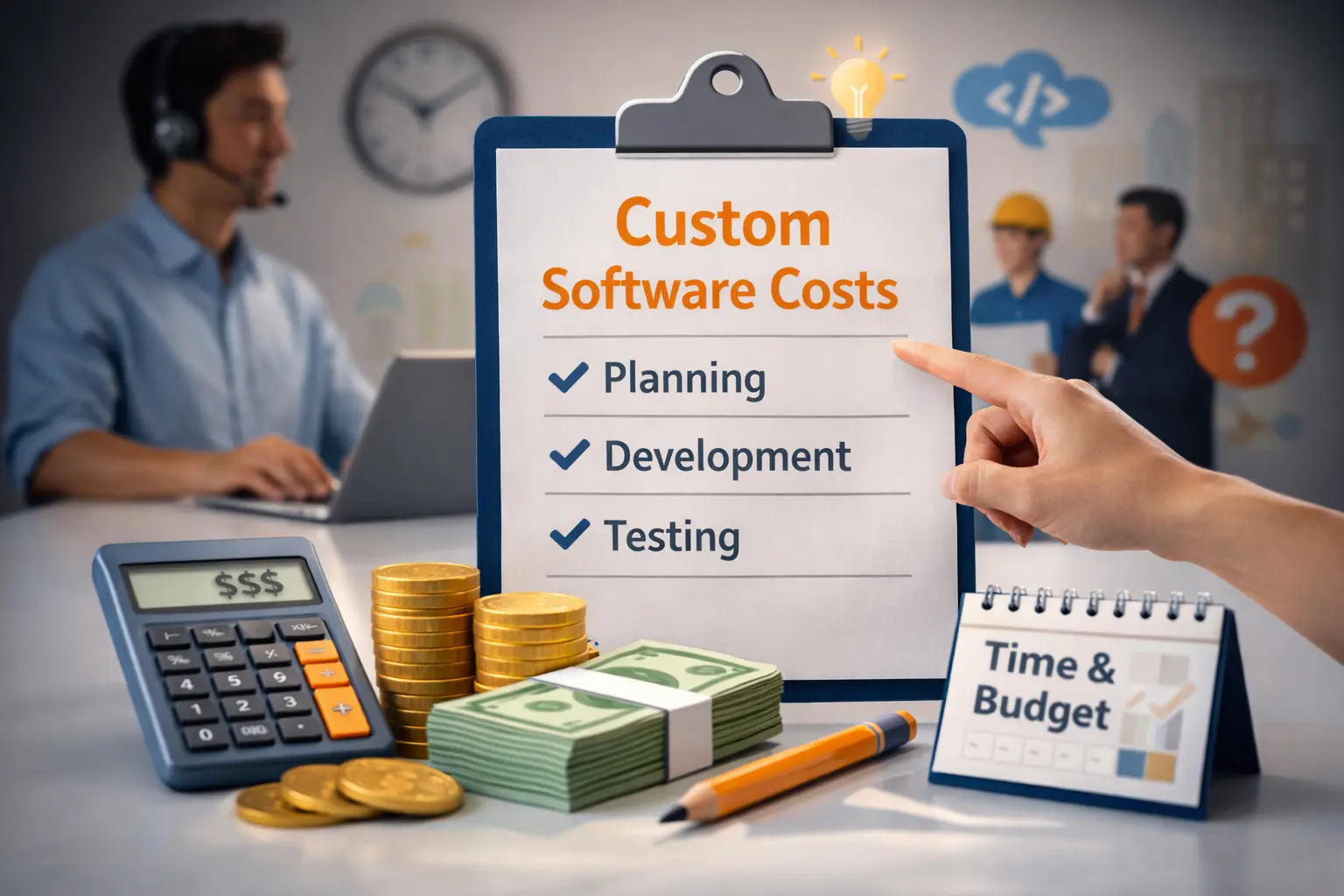
Typically, the cost is broken down into design, development, testing, and maintenance phases. For small to medium-sized businesses, the cost can range from a few thousand to tens of thousands of dollars, depending on the complexity and scope of the project. For larger enterprises with advanced requirements, the cost can rise even higher.
It's essential to work with experienced developers who can provide a detailed cost estimate and help you understand the long-term benefits of investing in custom ecommerce software tailored to your business. For more details on our services and pricing, visit our custom software pricing page.
Key Features of Custom Ecommerce Websites
Custom ecommerce websites offer a range of tailored features that allow businesses to create a unique and optimized shopping experience for their customers. These features go beyond basic functionalities to enhance customer satisfaction, improve operational efficiency, and boost sales. Below are some of the essential features that a custom ecommerce website can offer:
1. Custom Product Catalogs and Displays
A custom ecommerce website allows businesses to showcase their products in a unique way, tailored to their branding and customer needs. Whether you have a large inventory with various categories or niche products, the product catalog can be designed to organize and display items effectively. Features like dynamic filtering, sorting options, and advanced search capabilities ensure customers can quickly find what they're looking for.
2. Advanced Search and Filtering Options
Customers expect to find products easily and quickly on ecommerce websites. A custom solution can incorporate advanced search features, allowing users to search by various criteria like price range, product attributes (e.g., color, size, brand), and even customer ratings. Filtering options enhance the user experience by making it simple to refine product choices, which can lead to higher conversion rates.
3. Flexible Payment Gateways
Custom ecommerce websites allow businesses to integrate a variety of payment methods to accommodate their target audience. From traditional credit card payments to newer solutions like PayPal, Apple Pay, or cryptocurrency, custom ecommerce software can support multiple payment gateways to ensure seamless transactions. This flexibility enhances convenience for customers and reduces cart abandonment rates.
4. Mobile-Optimized Design
With an increasing number of users shopping on their mobile devices, having a mobile-optimized website is crucial. A custom ecommerce website is designed to be fully responsive, ensuring that it offers an optimal shopping experience across all devices. Whether customers are using smartphones or tablets, they can navigate through your website with ease, improving their overall shopping experience and engagement.
5. Personalized User Experience
A key feature of custom ecommerce websites is the ability to create a personalized experience for each visitor. This can include tailored product recommendations based on browsing history, past purchases, and customer preferences. Personalization enhances the shopping journey by making it more relevant to each individual, ultimately boosting sales and customer loyalty.
6. Integration with Third-Party Services
Custom ecommerce websites can be seamlessly integrated with third-party services like customer relationship management (CRM) tools, email marketing platforms, inventory management systems, and analytics tools. This integration allows for streamlined operations and better tracking of business performance. Data synchronization ensures that inventory, orders, and customer data are updated in real-time across all platforms, improving efficiency and accuracy.
7. Advanced Security Features
Security is a top priority for ecommerce businesses, especially when handling sensitive customer data. Custom ecommerce websites are built with robust security measures such as SSL encryption, secure payment gateways, two-factor authentication (2FA), and protection against data breaches. These security features help protect both the business and customers, building trust and ensuring compliance with data protection regulations.
8. Scalable Infrastructure
One of the most important aspects of custom ecommerce websites is their scalability. As your business grows, so should your website’s capabilities. Custom ecommerce solutions are designed with scalability in mind, allowing businesses to add new products, features, and services without compromising the site’s performance. This is particularly important for businesses that plan to expand or enter new markets in the future.
9. SEO Optimization
Custom ecommerce websites are built with SEO best practices in mind. Customizing SEO elements such as meta tags, URLs, header tags, and alt text can improve the visibility of your products in search engines. This ensures that your ecommerce website ranks well in search results, attracting more organic traffic and potential customers.
10. Advanced Reporting and Analytics
Tracking website performance is crucial for making data-driven decisions. Custom ecommerce websites can integrate advanced reporting and analytics tools that provide real-time insights into sales, traffic, customer behavior, and inventory. This data helps businesses optimize their marketing efforts, improve product offerings, and make informed decisions to drive growth.
11. Multi-Language and Multi-Currency Support
For businesses targeting international markets, custom ecommerce websites can offer multi-language and multi-currency support. This ensures that customers from different regions can navigate your website in their preferred language and make purchases in their local currency. By offering this convenience, businesses can expand their reach and cater to a global audience.
12. Custom Shipping and Tax Calculations
A custom ecommerce website can integrate shipping and tax calculation features that are specific to the business’s location and customer base. This allows businesses to provide accurate shipping fees, tax rates, and delivery options based on factors like the customer’s location, shipping method, and order size. This not only improves the customer experience but also ensures that businesses comply with local tax regulations.
13. Customer Reviews and Ratings
Customer reviews and ratings play a vital role in ecommerce decision-making. A custom ecommerce website can feature a robust review system that allows customers to leave feedback on products they’ve purchased. These reviews help other customers make informed decisions and can also improve trust and credibility for your brand.
14. Loyalty Programs and Discounts
Custom ecommerce websites can incorporate features like loyalty programs, discount codes, and promotional offers to incentivize customers. Whether it’s a reward system for frequent shoppers or special discounts for first-time customers, these features help drive customer retention, boost sales, and encourage repeat purchases.
Is Custom Ecommerce Software Right for Your Business?
Custom ecommerce software is ideal for businesses with unique needs or those that anticipate rapid growth. While off-the-shelf solutions can work for small businesses with straightforward requirements, custom ecommerce software offers greater control, flexibility, and scalability for businesses with more complex needs.
Before deciding, businesses should consider factors like budget, timeline, and the level of customization required. While custom solutions come with higher upfront costs, they offer long-term benefits that can significantly impact your business’s success.
Conclusion
Custom ecommerce software development offers businesses the ability to create a unique, scalable, and secure online store that meets their specific needs. By choosing a custom solution, businesses can differentiate themselves in a competitive market, improve customer experience, and streamline operations. The development process, from planning to launch, ensures that every feature is tailored to support business goals and future growth.
Investing in custom ecommerce software is an essential step for businesses aiming to enhance their online presence and create a seamless shopping experience for their customers.